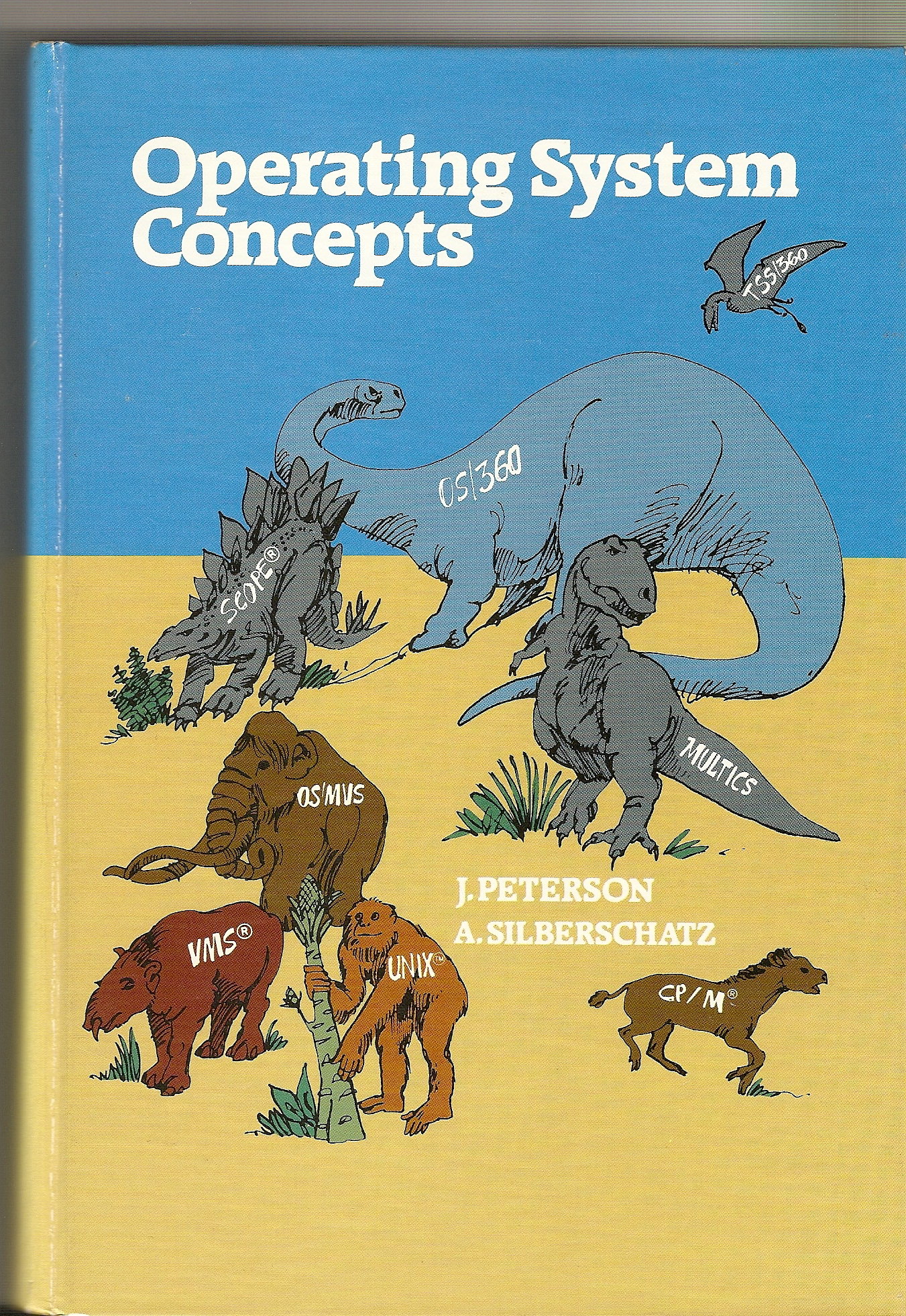
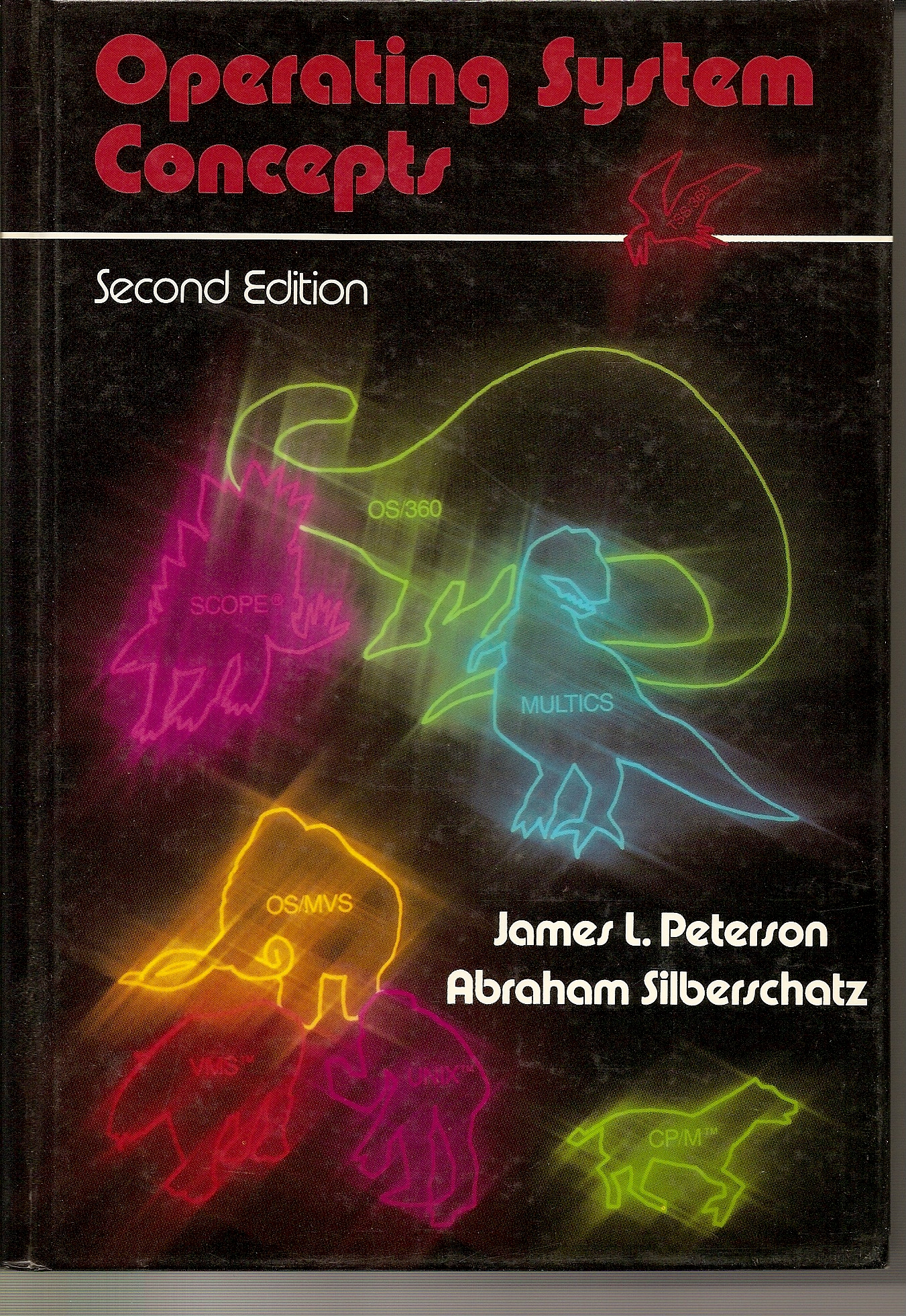
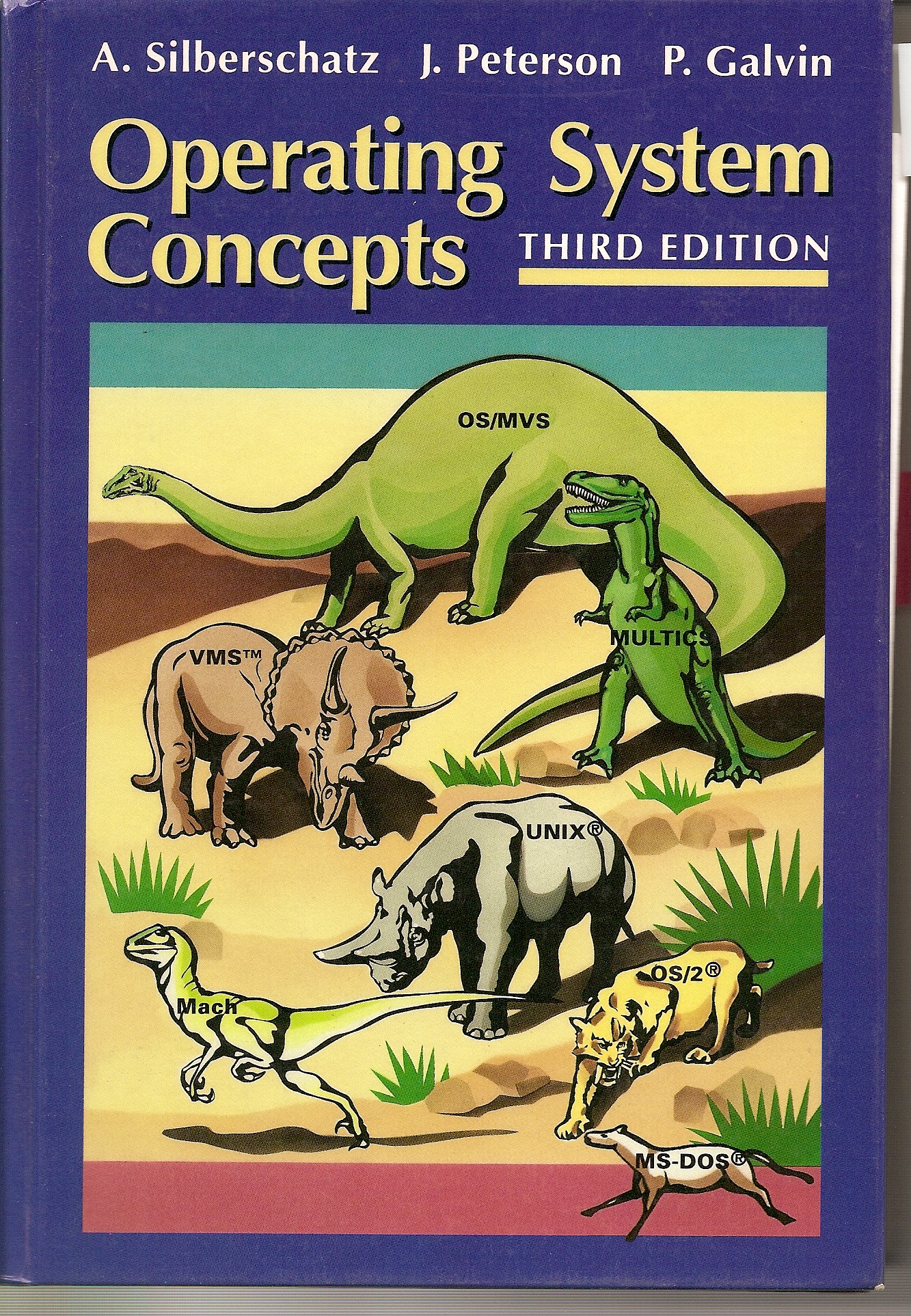
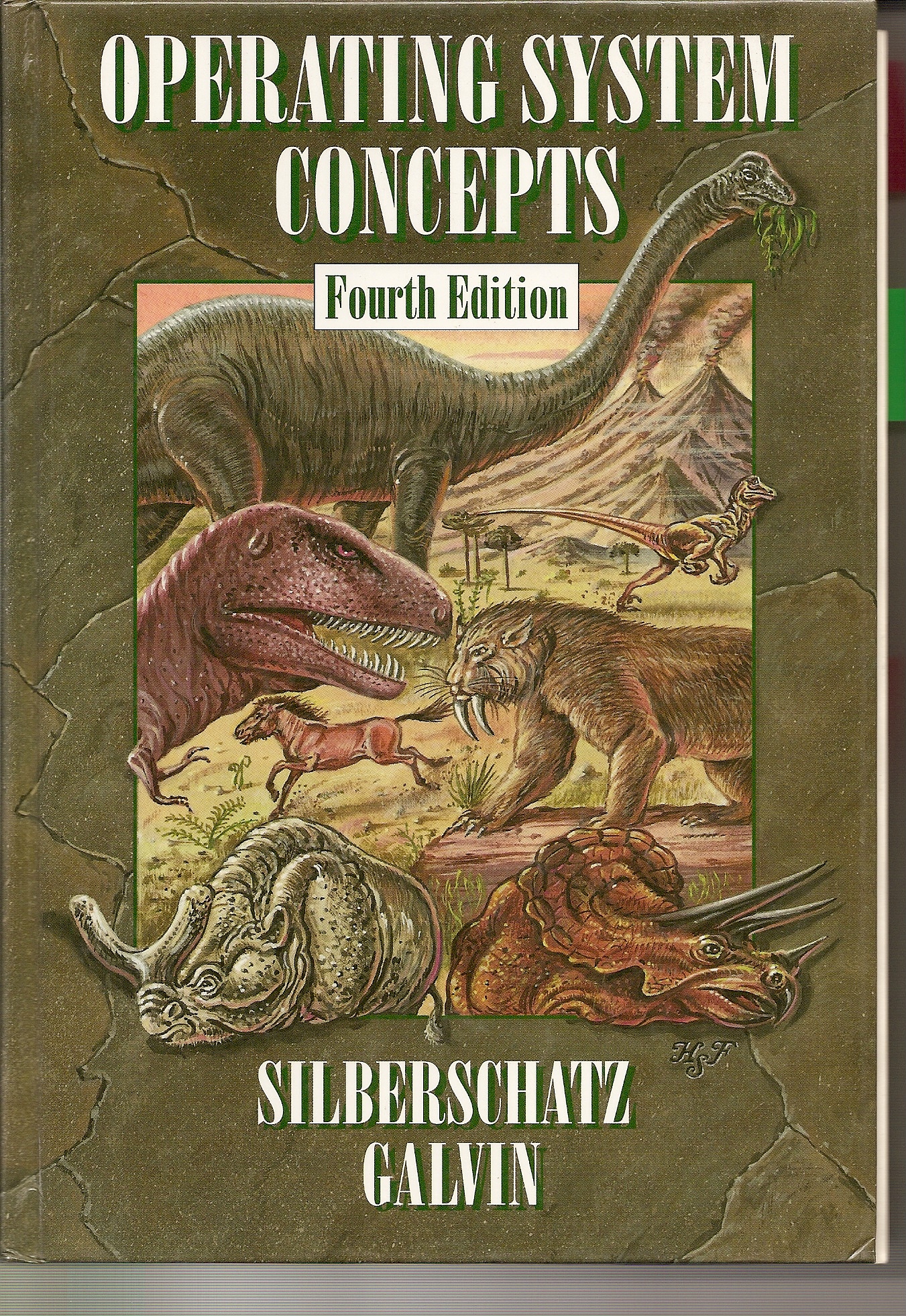
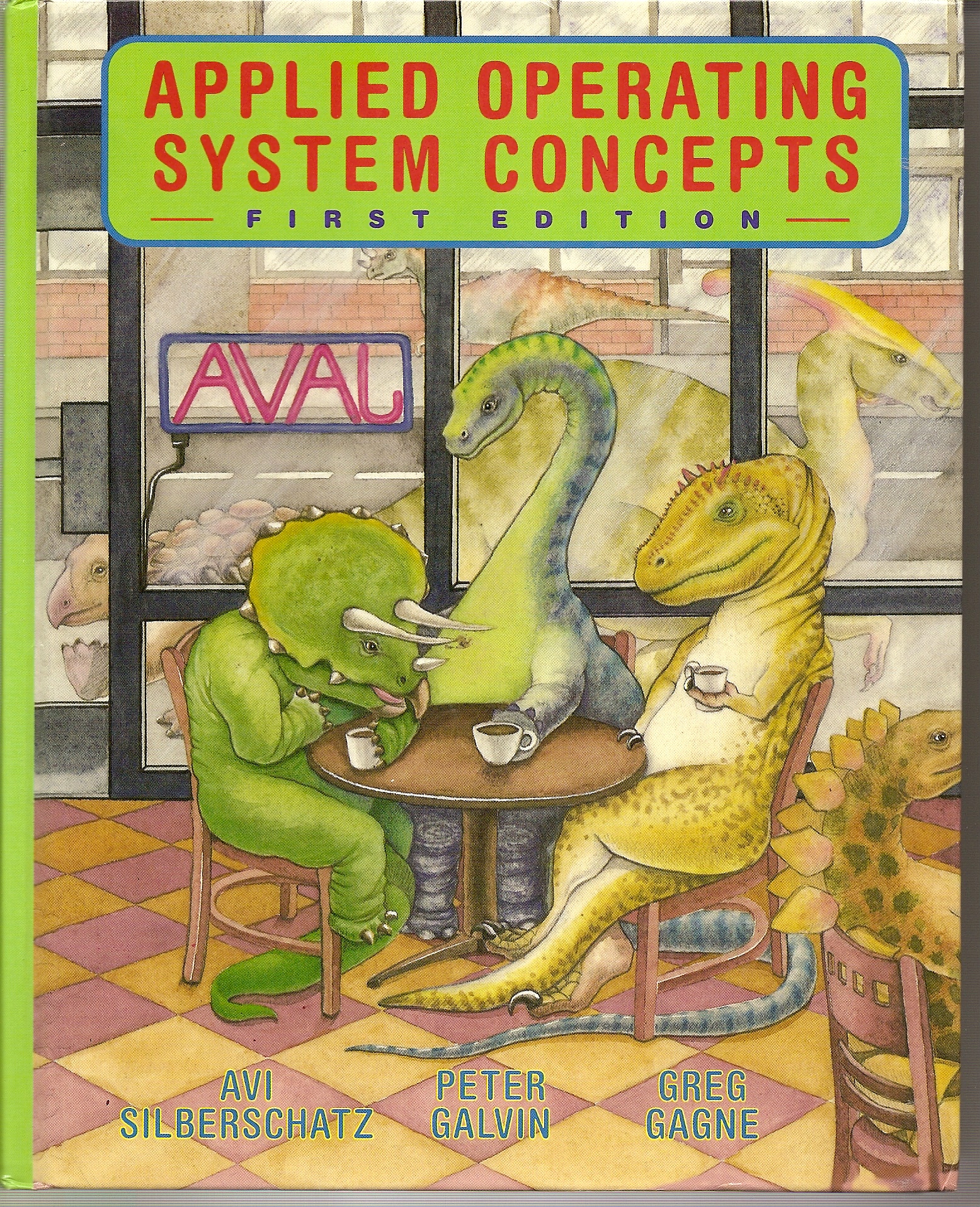
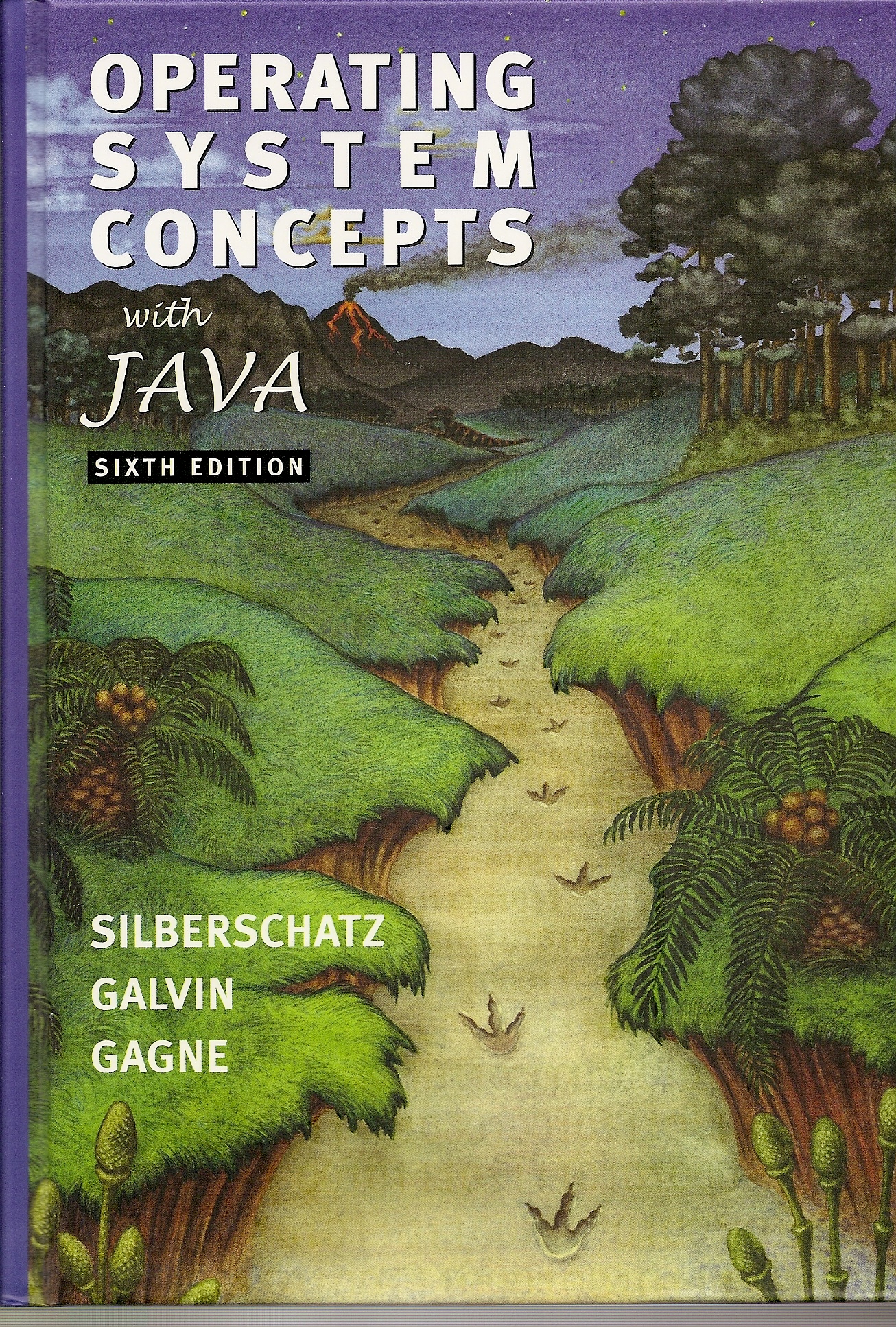
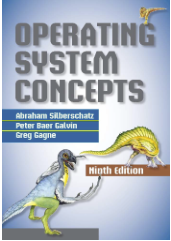
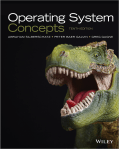
I thought it would be fun / informative to post the covers of the history Operating System Concepts. The general name for the series is “the dinosaur book” although the covers have included non-dinos as well. As far as we know this series is the best-selling operating system textbook.
The critters on the cover indicate both the evolution of operating systems and the ongoing “OS wars”. I became a co-author on this book in its Third Edition, after it was well established as one of the leading operating systems textbooks by James Peterson and Avi Silberschatz. Over time Peterson went on to other things and Avi and I were joined by Greg Gagne. The First Edition was published in 1983 and was 548 pages long. On its cover were dinosaurs and mammals labeled with the names of the important operating systems of the time, including OS/360, Multics, Scope, OS/MVS, VMS, UNIX, and CP/M. The book was a break-through because it covered not one operating system but abstracted key operating system features and used specific operating systems to illustrate those concepts. This method is still the one employed in the current edition. The Second Edition went disco with the same dinos and mammals but this time lit up in neon. The Third Edition updated the creatures and showed the following operating systems on the cover: OS/MVS, Multics, VMS, UNIX, OS/2, Mach, and MS-DOS. For the Fourth Edition we decided to stop labeling the animals on the cover, but on the inside of the cover we had descriptions of the animals as well as a time-line of operating system evolution. I thought that was cool. The same theme was in the Fifth Edition as well. The Sixth Edition had the animal information but stopped including the timeline. Along the way we published alternate versions of the book that used Java as the descriptive language and for exercises and projects. For more information on the current OSC, including sample exercises, errata, and teaching aids, check out the text home page. Note there are many covers not included here – translated copies for example. Will try to add those sometime.





 Peter Baer Galvin's Blog
February 19, 2014 at 1:37 pm
Thanks for posting the information. I used the very first edition of the book when I was taking the OS class as a student in 1984. Over the years I used various editions to teach the course after becoming a faculty member.
July 14, 2015 at 1:10 pm
I have the International Edition, which has a dinosaur-themed cover not shown here. Perhaps you would like to add it?
May 23, 2017 at 10:16 am
That’s a good point, there are many international versions I haven’t included. When I get a chance perhaps I’ll add some. Thanks.
August 18, 2016 at 7:37 am
I used the first edition… and now my son, doing computer science, is using the 7th edition as reference. Going hunting for the 9th edition tomorrow, 🙂 I still have the 1st edition. treasure.
February 17, 2018 at 8:50 am
Sir,
When opratinop system concept 10th edition publish in India.
February 18, 2018 at 4:45 pm
Hi, the publication is unknown as they are independent of Wiley USA and make their own plans. Sorry I don’t have more information…
October 12, 2019 at 9:42 am
[…] This article cover the concept of resident monitor and bare machine in operating system. Article also covers how the memory is organized using bare machine and resident monitor. For the study of Bare machine and Resident monitor I preferred Operating System Concepts: By Galvin […]
May 15, 2020 at 2:14 am
I want that first edition